
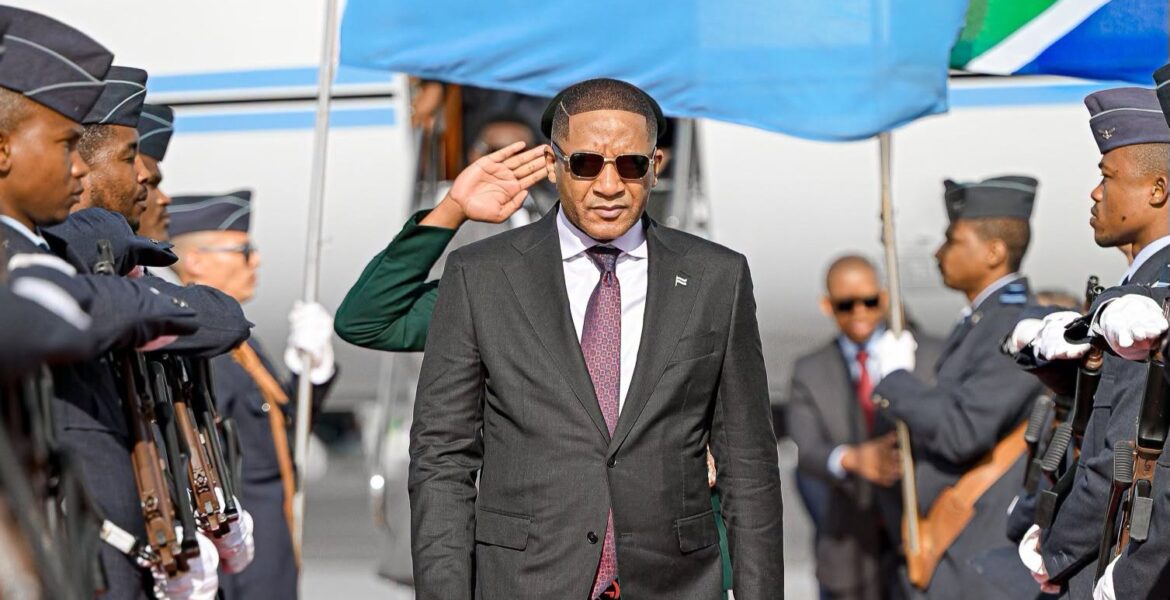
Amid growing reports that the medicine shortage is costing lives, President Duma Boko has appealed for patience, saying his government is working to dismantle years of corruption, procurement failures and systemic weaknesses blamed for the crisis
GAZETTE REPORTER
President Duma Boko has pleaded for patience from Batswana as his administration battles to resolve the country’s medicine shortages, blaming years of alleged corruption, procurement failures and weak supply chain systems for the crisis.
Addressing residents at Monarch kgotla in Francistown, Boko said the shortage of essential medicines was not a problem that emerged overnight, but the result of a procurement system he described as deeply flawed and vulnerable to abuse.
His remarks come amid growing public frustration over shortages of critical medicines in health facilities, with some citizens questioning why the government has struggled to restore consistent supplies months after taking office.
BOKO BLAMES LEGACY PROCUREMENT FAILURES
Boko said the crisis was rooted in past practices where medicines were allegedly procured in excessive quantities, resulting in wastage, expiry and financial losses.
“Medicines were sometimes purchased for populations far beyond actual demand, creating situations where supplies expired before reaching patients. Government also paid inflated prices,” he said.
He cited the destruction of expired medicines worth P95 million as evidence of the scale of the problem.
CRITICS QUESTION FOCUS ON THE PAST
However, the President’s explanation comes against the backdrop of criticism from some quarters that his administration has spent too much time highlighting problems inherited from previous administrations while struggling to deliver immediate solutions.
Critics argue that while investigating past failures is necessary, citizens currently facing medicine shortages need urgent interventions and accountability measures against those responsible for previous procurement failures.
Questions have also been raised over why no individuals have been held accountable for alleged wrongdoing linked to past procurement practices, despite repeated references to corruption and systemic failures.
The debate has placed pressure on the new administration to demonstrate that identifying the causes of the crisis will translate into swift action and tangible improvements for patients.
TECHNOLOGY SOLUTION TO FIX SUPPLY CHAIN
Boko said government was implementing measures aimed at preventing similar shortages in future, including the introduction of technology-driven medicine tracking systems.
He said the current supply chain was slowed by manual recording processes at Central Medical Stores (CMS), where medicines could take weeks to be recorded, stored and distributed to health facilities.
Under the proposed system, medicines will be tracked using scanners and real-time digital records from arrival at CMS until delivery to patients
“This will show what has arrived, where it has gone and how many patients have received it,” Boko said.
RACING AGAINST TIME
The President said government had already taken emergency steps to improve supply, including dispatching teams to monitor medicine shipments and exploring the use of the Botswana Defence Force (BDF) to assist with transportation if required.
“We ask the public not to lose hope. We understand the challenges, the difficulties and the suffering people have experienced,” he said.