
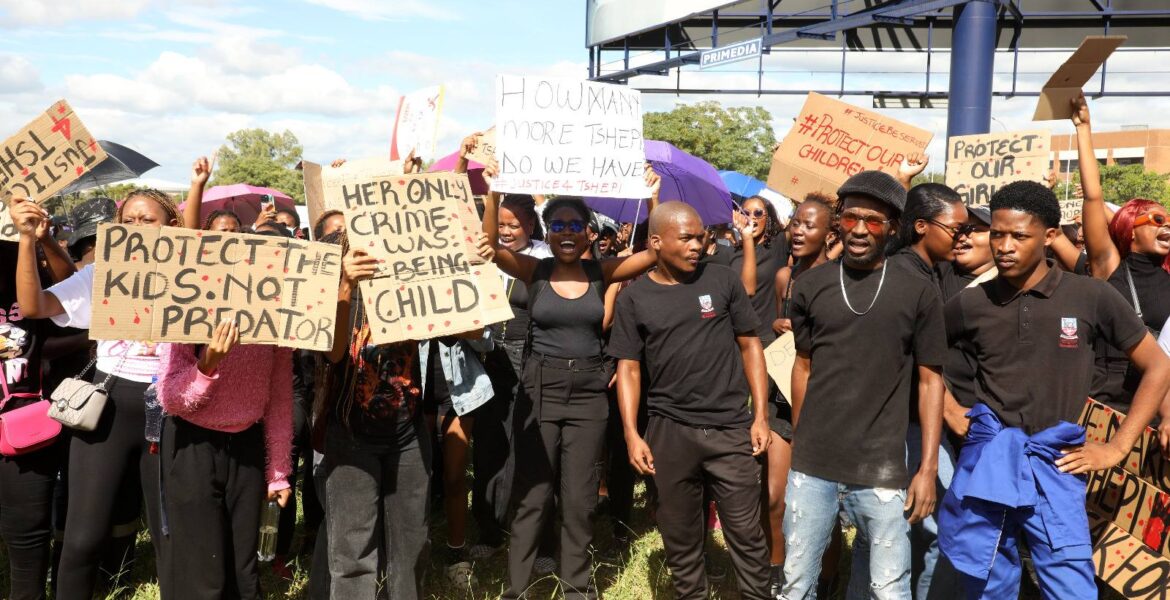
..As Botswana musician and activist Lioness Ratang criticise what she described as “selective solidarity” in regional GBV activism
GAZETTE REPORTER
A growing campaign demanding justice for 13-year-old Retshepile Setso Tshedu has sparked a heated cross-border dispute between activists in Botswana and South Africa, exposing divisions over capacity and solidarity in the fight against gender-based violence (GBV).
The Motswana teenager is alleged to have died under mysterious circumstances, a case that has since triggered widespread outrage and renewed calls for accountability.
The debate intensified after Botswana musician and activist Lioness Ratang criticised what she described as “selective solidarity” in regional GBV activism, following South African organisation Women for Change (WFC)’s decision not to actively engage in the case due to limited capacity.
“The way we in Botswana rally behind South Africa with cases of GBV thinking we are all in this together—wow. Every man for himself, you say,” Ratang posted, sparking a wave of online responses.
WFC responded by clarifying its position, stating: “Hey dear, we need to focus on South Africa at this point as we do not have the capacity.”
WOMEN FOR CHANGE DEFENDS LIMITED CAPACITY
In a detailed statement, WFC defended its stance, saying it operates with limited resources despite growing visibility across the region.
“We want to be honest about our capacity, not as an excuse but as context. We are a team of five people working relentlessly to confront a crisis that feels bigger than all of us,” the organisation said.
It added that while its reach has expanded to over one million people through campaigns such as the G20 Women’s Shutdown, its resources have not kept pace with demand.
“Every story matters deeply to us. We do not have weekends or holidays… we are human, doing the best we can in a space that is emotionally and operationally overwhelming,” the group said.
Founded by activist Sabrina Walter, WFC is a South African non-profit advocating against GBV and femicide through digital campaigns and systemic reform advocacy.
PETITION REIGNITES OUTRAGE
At the centre of the renewed public anger is a petition by the Re A Bua Foundation, which has brought fresh scrutiny to Tshedu’s death in May 2025.
According to the petition, her death was initially reported as suicide, but a post-mortem reportedly revealed evidence of prolonged sexual abuse, including severe physical violations and sexually transmitted infections. Despite this, no arrests have been made nearly ten months later.
The petition further alleges irregularities in the investigation, including delays in conducting a post-mortem, interference in the case, and mishandling of evidence as investigators changed.
“We, the undersigned, write with deep sorrow, outrage, and urgency,” the petition states, calling for arrests, accountability, and urgent intervention by law enforcement.
The Re A Bua Foundation is also demanding broader reforms, including independent police oversight, strengthened child protection systems, and improved support for GBV survivors.