
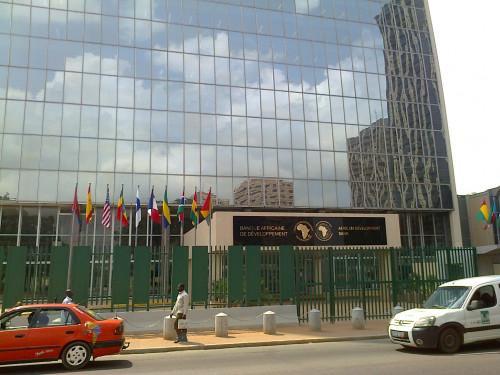
The AfDB says Botswana remained in contraction in 2025 as diamond dependence and collapsing investment left it behind rebounding regional economies.
GAZETTE REPORTER
Botswana emerged as the weakest-performing economy among Southern Africa’s major economies in 2025, with the African Development Bank (AfDB) warning that heavy dependence on diamonds has left the country exposed to global commodity shocks.
The AfDB’s Southern Africa Economic Outlook 2026 shows that Botswana recorded negative growth in 2025, placing it at the bottom of the region’s growth rankings as neighbouring economies rebounded.
GROWTH CONTRACTS
According to the report, Botswana’s economy contracted by 2.8 percent in 2024 before recording growth of minus 0.3 percent in 2025. The subdued performance was largely driven by a collapse in investment and severe external pressures linked to the downturn in the global diamond market.
“Botswana’s economy shows a contraction of 2.8% in 2024 and records a subdued recovery to -0.3% in 2025,” the AfDB states. It warns that “the downturn in the global diamond market underscores the risks associated with commodity dependence.”
NEIGHBOURS REBOUND
Zimbabwe recorded the strongest economic performance in Southern Africa in 2025, with growth of 7.6 percent. Zambia followed at 5.2 percent, while Eswatini achieved 4.6 percent.
Botswana remained in contraction, reflecting what the AfDB describes as structural weaknesses, including limited diversification and over-reliance on extractive industries.
“Growth remained negative in Botswana (-0.3%), reflecting a significant contraction in investment alongside sizeable external adjustments,” the report states.
DIAMOND EXPOSURE
The assessment has renewed concern over Botswana’s decades-long reliance on diamonds as the backbone of government revenue, exports and economic growth.
Diamonds have historically contributed significantly to foreign exchange earnings and fiscal stability, but weaker global demand and prices have exposed an economy that has struggled to develop alternative growth engines.
The report says industrial activity across Southern Africa remains concentrated in extractive and resource-based industries, with manufacturing capacity still limited.
“Industrial activity remained concentrated in extractive and resource-based industries, reflecting the region’s continued dependence on mining and primary commodity production,” AfDB says.
UNEVEN RECOVERY
Botswana’s contraction comes as other regional economies recover through agriculture, investment and consumption. Zimbabwe’s growth was strongly supported by household consumption, while Zambia benefited from consumption and investment.
The AfDB says regional growth improved from 2.0 percent in 2024 to 2.3 percent in 2025, with further expansion expected, although the recovery remains uneven.
“Quality of growth remains uneven across the region,” the report warns. It says much of the expansion is driven by agriculture and extractive industries, which create limited formal employment opportunities.
Services added 1.7 percentage points to regional GDP growth, while industry remained a drag, subtracting 0.1 percentage points.
The AfDB says finance, tourism, telecommunications and public administration have helped more diversified economies perform better, while resource-dependent countries remain vulnerable.