
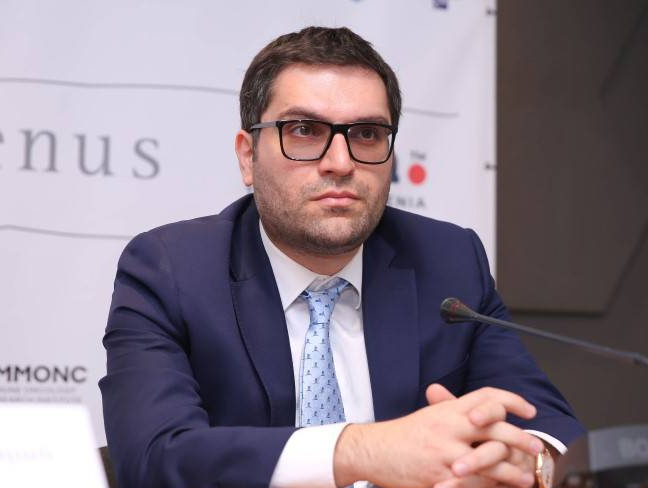
Botswana-backed Dr Gevorg Tamamyan has placed stronger health systems, equitable access to treatment and institutional accountability at the heart of his pitch to African health ministers as the race for the WHO ’s top job gathers momentum
TEFO PHEAGE
Botswana’s candidate for the World Health Organization (WHO) Director-General position, Dr Gevorg Tamamyan, has challenged Africa to envision a future in which preventable disease outbreaks no longer threaten the continent and children with cancer enjoy the same chances of survival as their counterparts in wealthy nations.
The Armenian paediatric oncologist was among seven candidates who presented their credentials and priorities to African health ministers at the Conference on Public Health in Africa (CPHIA) on Monday, as competition for the leadership of the global health agency intensifies ahead of the 2027 election.
Ethiopian Health Minister Dr Mekdes Daba Feyssa challenged the candidates with a direct question: “What three things can you offer to Africa?”
For Tamamyan, Botswana’s nominee, the answer lies largely in addressing the systemic weaknesses that continue to perpetuate health inequalities between Africa and the developed world.
Bridging Health Inequalities
Tamamyan argued that by 2032, outbreaks such as Ebola should no longer pose a major threat to Africa and that disparities in childhood cancer survival should have been addressed.
“In 2032, we should not say that in Africa, kids with cancer have survival 20-30% while in high-income countries, it’s 80-85%. It’s about the systems. If we treat kids with cancer, it means we build the system,” stressed Tamamyan.
His argument is that the ability of countries to manage complex diseases such as cancer reflects the strength of their broader healthcare systems, from diagnostic capabilities and specialist training to access to medicines and sustainable healthcare financing.
Botswana’s candidate has also received a favourable assessment from Peter Singer, a prominent global health expert, who ranked him first with a score of 12 out of a possible 14 points.
Challenging the Status Quo
Tamamyan’s engagement with African health ministers follows his address to WHO member states last week, during which he outlined his vision for a more responsive, equitable and accountable global health organisation.
He spoke of cancer patients waiting months for treatment, frontline health workers who died without access to COVID-19 vaccines and WHO personnel risking their lives to evacuate patients under bombardment.
His central message was that WHO must become more effective in supporting those working to save lives, particularly in resource-constrained environments.
Tamamyan also confronted questions about his unconventional candidature.
“I have never worked at WHO. I have never run a ministry. Many people call me the outsider.”
Rather than relying on traditional institutional credentials, he pointed to his experience in building healthcare services, mobilising resources and establishing international professional networks.
After returning from Boston to Armenia in 2015, Tamamyan helped develop paediatric oncology services, train specialists and establish a foundation that has covered diagnosis and treatment for children and young adults up to the age of 25 for nine years.
He also highlighted the growth of OncoDaily, an international oncology media initiative that developed into a major global platform within three years.
Botswana’s Choice
One of the defining moments of his address was his reflection on Botswana’s decision to nominate him, despite his having no nationality ties to the southern African country.
Tamamyan thanked President Duma Boko and his administration for challenging conventional practices in international politics by looking beyond nationality and placing emphasis on merit.
A Measurable Presidency
Tamamyan’s proposed reform programme rests on three pillars: WHO for People, WHO for Countries and WHO Accountable for Results.
The programme contains 12 measurable commitments, accompanied by an unusual personal undertaking: should he deliver less than 80 percent of his commitments during his first term, he will not seek re-election.
“What gets measured gets done,” Tamamyan said.
He called for greater transparency, measurable results and an organisation less susceptible to political bargaining, urging member states to assess candidates on merit and their ability to deliver change rather than geopolitical considerations.
“In practice, humanity means one thing: saving lives. That is the core mandate. Everything else serves it.”
He concluded: “I don’t belong to any major or minor power. I offer to belong to each of you and to every human being.”
The Competition
Tamamyan faces competition from six other candidates, each offering African governments different approaches to addressing the continent’s healthcare challenges.