
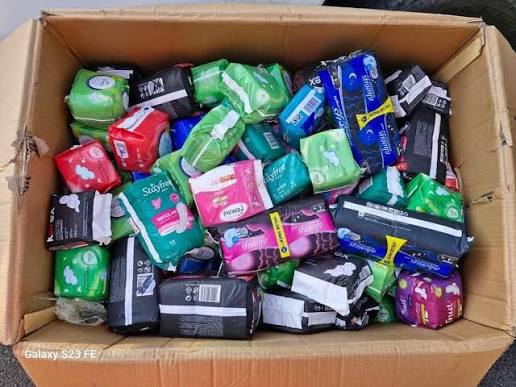
Government says its free sanitary pads programme has reached 80,498 girls nationwide, but admitted supply interruptions are testing whether the flagship pledge can become a dependable public service.
SESUPO RANTSIMAKO
The UDC government’s flagship promise to provide free sanitary pads to female learners is facing a major implementation test, with supply interruptions threatening to undermine a programme intended to keep girls in school and address menstrual hygiene challenges.
NATIONAL REACH
Addressing the media this week on the government’s midterm performance, Minister of State in the Presidency Moeti Mohwasa said the programme, introduced in June 2025, had distributed 321,992 packs to 80,498 registered girls across all 10 education regions.
The figures show that government has established a nationwide distribution system, but the interruptions experienced after the first two cycles raise questions over whether it can maintain a reliable supply to beneficiaries.
SUPPLY BREAKS
According to the minister, government has already spent P2.62 million on procurement and distribution during the first two cycles of the programme.
Mohwasa acknowledged that implementation had not been smooth, conceding that supply interruptions had affected subsequent cycles.
“Supply interruptions affected subsequent cycles,” Mohwasa said.
For a programme directly linked to the welfare and education of schoolgirls, inconsistent supplies could leave beneficiaries without the products Government promised to provide, potentially undermining the purpose of the initiative.
FLAGSHIP TEST
The programme was introduced as one of the UDC government’s priority interventions, making the supply failures particularly significant as government takes stock of its performance since assuming office in 2024.
Mohwasa said the programme was operational and had achieved national reach, but stressed that stronger supply reliability and greater scale were now required.
DELIVERY GAP
The minister said the sanitary-pad programme is not the only area where government says more work is required. He added that the government must rebuild fiscal buffers and ensure that legislation already passed is translated into functioning institutions and measurable improvements for citizens.
The sanitary-pad programme therefore presents a straightforward test of government’s ability to turn a popular manifesto commitment into a dependable public service.
While the distribution figures provide evidence of progress, the admission of supply interruptions exposes a gap between launching a programme nationally and ensuring that beneficiaries receive uninterrupted support.