With state enterprises reporting losses, weak governance and missing accounts, government is preparing an overhaul that will test whether public money delivers value.
BONGANI MALUNGA
Government is preparing a shake-up of Botswana’s state-owned enterprises (SOEs), with underperforming parastatals facing restructuring, consolidation or other intervention amid mounting concerns over losses and weak governance.
Only a handful of the country’s 63 parastatals consistently make money, raising questions about the cost of keeping them afloat.
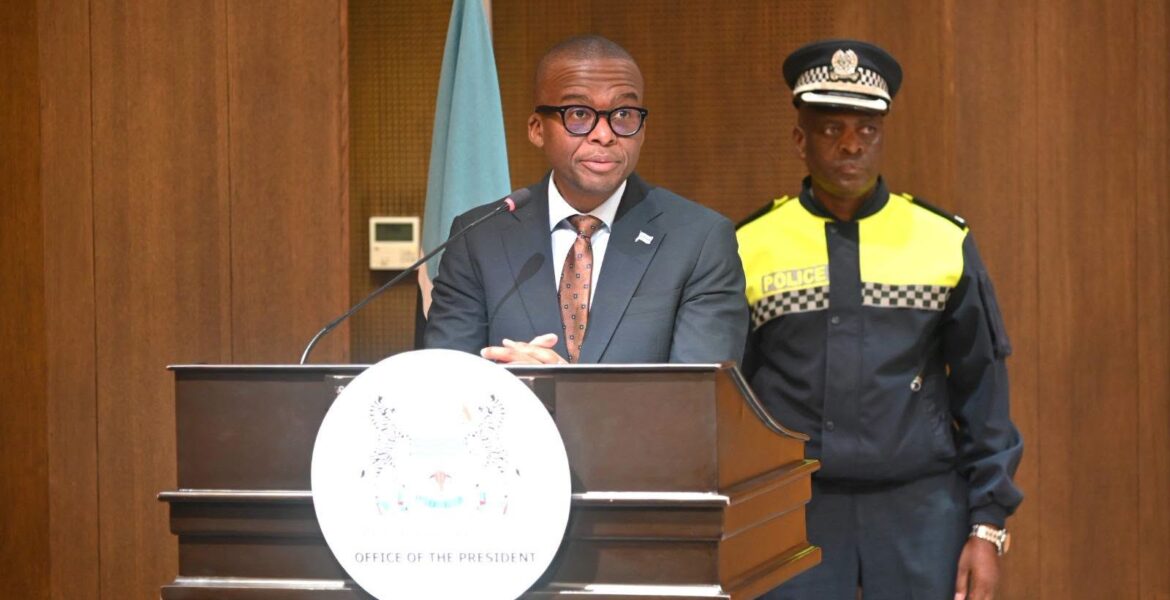
Vice President and Minister of Finance Ndaba Gaolathe reinforced the reform agenda at a stakeholder consultation on the SOE Ownership Policy in Francistown last Thursday, warning that taxpayers cannot indefinitely support entities that fail to show value for money.
Fiscal Exposure
“Recent fiscal risk analysis points to a sector where information is fragmented, audited financial data is not always readily available and the government lacks a sufficiently consolidated view of performance,” Gaolathe said.
The gaps have complicated efforts to establish the true financial cost of struggling parastatals.
The latest available Auditor General figures put accumulated SOE deficits at P485.1 million by March 2023, up slightly from P483.3 million the previous year.
The 2026/27 budget provides P16.1 billion in grants and subventions to parastatals and local authorities, with much of that funding destined for SOEs.
Losses Mount
Parliament’s Committee on Statutory Bodies and State Enterprises has heard evidence of mounting financial problems.
Botswana Development Corporation reported a P167 million loss for the year ending June 2025, with nearly half its loan portfolio classified as non-performing.
Botswana Railways reported accumulated operating losses of P235 million between 2021 and 2024, including P60 million in 2024.
The Botswana Agricultural Marketing Board told the committee in May that it was operating without a board and owed suppliers approximately P66 million. Some farmers had reportedly waited more than two years to be paid, while management identified weaknesses in procurement, finance and reporting.
Governance Failures
Botswana National Productivity Centre has operated without a board since June 2024. MPs have also questioned why its audited financial statements for 2023/24 and 2024/25 were not tabled.
Air Botswana has lagged in financial reporting amid governance problems, while government injected about P500 million into the airline between 2021 and 2025.
Gaolathe told Parliament last year that only 14 of 45 assessed SOEs complied with King III corporate governance principles, leaving more than two-thirds below that benchmark.
Ownership Test
Government’s proposed ownership framework is expected to guide decisions on which SOEs remain strategically necessary, which need restructuring and how their performance should be measured.
“Every Pula committed to sustaining an underperforming enterprise is a Pula that is unavailable for other national priorities. The government has to be satisfied with its investment in our SOEs and what those investments produce and whether they produce value to our public,” Gaolathe said.
The policy will place greater emphasis on whether continued state ownership produces measurable financial, economic or public-service value.