
Ian Khama’s refusal to withdraw his attack on Zambia’s president risks complicating the UDC government’s regional diplomacy as Zambian figures demand evidence and an apology.
SESUPO RANTSIMAKO AND BONGANI MALUNGA
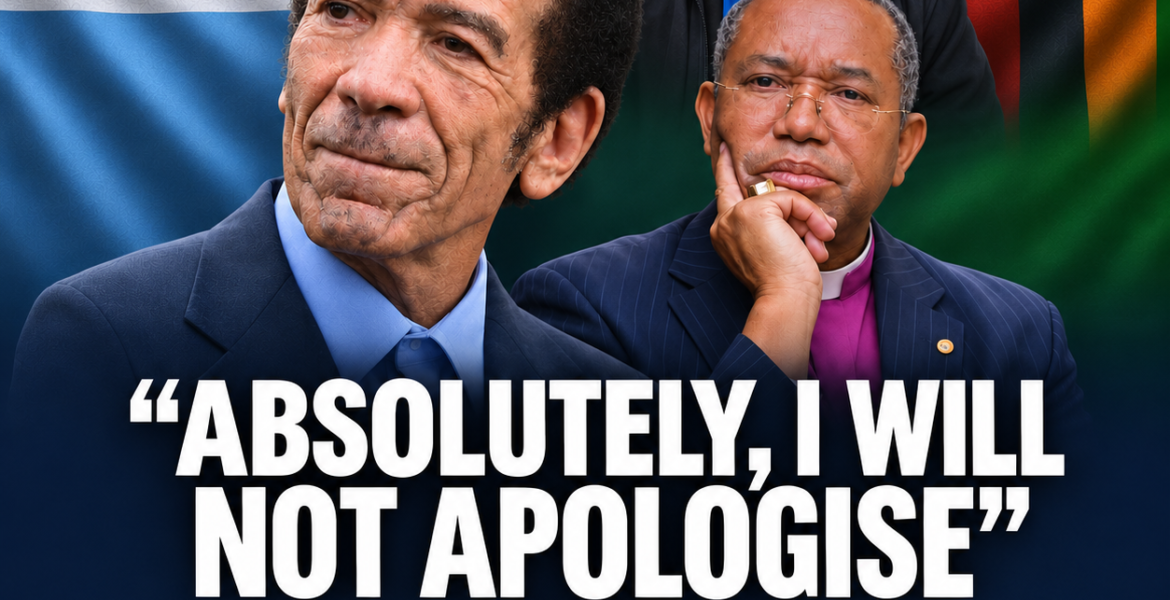
Former president Ian Khama has refused to apologise for calling Zambian President Hakainde Hichilema “Africa’s newest dictator”, standing by allegations of political persecution and electoral interference despite demands from Zambian figures that he substantiate or withdraw his remarks.
“Why should I apologise for stating facts? Absolutely, I will not apologise. Because as much as there are calls for me to apologise, I have received many messages from Zambia thanking me for what I said and what I stand for,” Khama told The Botswana Gazette.
His refusal risks complicating the UDC government’s regional diplomacy, with President Duma Boko being asked to intervene while his administration maintains relations with Zambia.
DIPLOMATIC TENSION
The dispute stems from Khama’s intervention during a sitting of Ntlo ya Dikgosi in Gaborone, where he questioned Minister of International Relations Dr Phenyo Butale about Botswana’s attendance at Hichilema’s inauguration.
“With the stated position of Botswana as upholding the rule of law, democracy and human rights, with hindsight, does the Minister regret that we attended the inauguration of Africa’s newest dictator in Zambia, after they have violated all these principles that we uphold?” Khama asked.
Butale defended Botswana’s attendance, saying diplomatic engagement with neighbouring countries was necessary to influence dialogue and democratic processes.
His response highlighted the tension between Khama’s public criticism and the government’s approach to relations with its neighbour. While Khama insists that speaking out defends democratic principles, Butale’s position emphasises continued engagement as a means of influencing developments.
The exchange leaves the government navigating a dispute involving a former president whose remarks were made in a public institutional setting, rather than through a private political statement.
APOLOGY DEMANDS
Zambian youth advocate and Grow Zambia Agenda ambassador Mukuka Kampamba demanded a public apology within 24 hours, describing Khama’s comments as an insult to Zambians. He challenged Khama to produce evidence and called on Boko to intervene.
Former Zambian Vice President Enock Kavindele, speaking in Lusaka, urged Khama to respect Zambia’s sovereignty and produce credible evidence for allegations against an elected government. He argued that serious accusations should rest on facts rather than political labels.
Nominated Member of Parliament Judith Kabemba Nkonge also demanded that Khama withdraw his remarks and apologise to Hichilema and Zambians.
Describing his intervention as “reckless and unbecoming of a former head of state”, she argued that Khama should promote diplomacy and respect for democratic institutions.
The backlash extended to State House, where Chief Communications Specialist Clayson Hamasaka criticised Khama and referred to his previous meetings with Hichilema.
“We have lots of intermarriage between Zambia and Botswana, so we can’t believe those statements are attributed to a former President,” Hamasaka said.
KHAMA STANDS FIRM
Khama maintains that his criticism concerns the principles underpinning multiparty democracy, including free electoral competition and voters’ ability to choose their representatives.
He accused Hichilema’s administration of persecuting opponents through arrests, detention, beatings, fabricated criminal charges and interference with electoral and judicial processes. These remain Khama’s allegations, which Zambian figures have challenged him to substantiate.
Khama further maintained that human rights organisations had raised similar concerns about the treatment and detention of political opponents in Zambia.
He questioned why he should apologise when, in his view, organisations monitoring human rights had also criticised Zambia’s record.
The competing positions have widened the controversy beyond the original remark. Zambian critics are demanding evidence and respect for their country’s leadership, while Khama presents his refusal to retreat as a defence of democratic accountability.
For Botswana’s government, the immediate diplomatic challenge is to preserve engagement with Zambia as the public confrontation continues to attract regional attention, without allowing Khama’s position to be confused with its own stated approach to regional relations.