
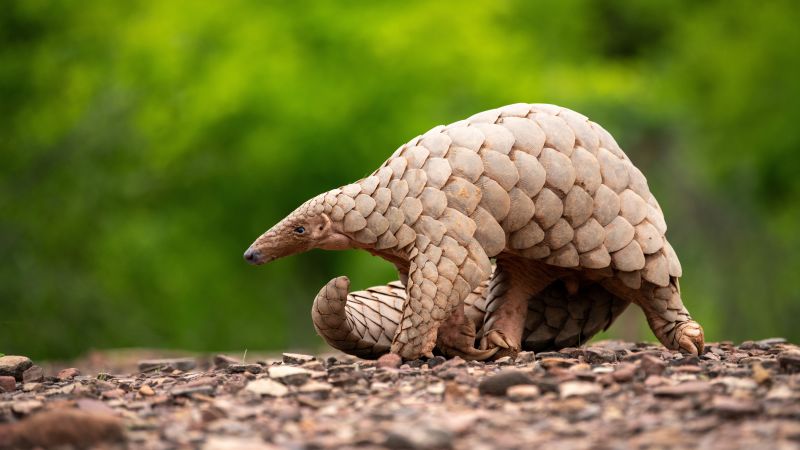
A fresh cross-border arrest exposes Botswana’s growing role as a source and transit point in the illegal pangolin trade feeding Asian markets.
BONGANI MALUNGA
A growing number of Batswana are being caught on the wrong side of the law in the illicit pangolin trade, as the country increasingly emerges as part of a regional trafficking network fuelled by strong international demand for the world’s most trafficked mammal.
The latest case involves 27-year-old Botswana citizen Tholego Gaebolae, who was arrested on 26 August after allegedly crossing the Limpopo River from Botswana into South Africa with a live pangolin concealed in his bag.
According to a statement released by the South African Police Service, South African National Defence Force members conducting routine patrols near the Groblersbrug Border Post spotted Gaebolae crossing the river. “He could not produce a passport and a subsequent search uncovered the live animal, which he could not account for. He was handed over to Tom Burke Border Policing and appeared before the Phalala Magistrate’s Court on 28 August,” the SAPS revealed.
POSTPONED
Gaebolae was remanded in custody, with the matter postponed to 17 September for a bail application and further investigation. He faces charges relating to possession of a specially protected wild animal and contravention of South Africa’s Immigration Act.
If convicted, he could face up to five years in prison, with South African courts having previously imposed five-year sentences for illegal possession of pangolins.
His arrest follows another case involving Batswana in September 2024, when Rhine Morgan Kemsley, 35, and Mothusi Malcom Lefa, 49, were arrested in Sandton, Johannesburg, after allegedly being found with a live pangolin hidden inside a speaker box.
A WIDER PROBLEM
The incidents point to a wider problem. Botswana’s Department of Wildlife and National Parks reported 30 illegal pangolin-trade cases between 2015 and 2021, with 2017 recording the highest number at 12 cases.
According to international reports, the trade is not being driven by local demand. Research shows that Africa has become an increasingly important source for pangolins destined for Asian markets, particularly as demand for scales has continued despite the international commercial trade ban.
Pangolin scales have traditionally been used in remedies in parts of Asia, while their meat is regarded as a delicacy in some markets. All eight pangolin species have been prohibited from international commercial trade under CITES since 2017.
INTERNATIONAL DEMAND
The scale of the international market helps explain why live pangolins are being moved across southern African borders. A 2025 study tracking pangolin trafficking in South Africa found suspects from 11 nationalities, including Botswana, and identified Africa as an increasingly important source for Asian demand.
For Botswana, the repeated involvement of its citizens in cases outside the country raises questions about whether local poachers and couriers are being drawn into sophisticated cross-border networks whose ultimate markets lie thousands of kilometres away.
The emerging picture is therefore less about isolated possession of a protected animal and more about Botswana’s potential role as a source and transit point in a lucrative international wildlife-trafficking chain.