
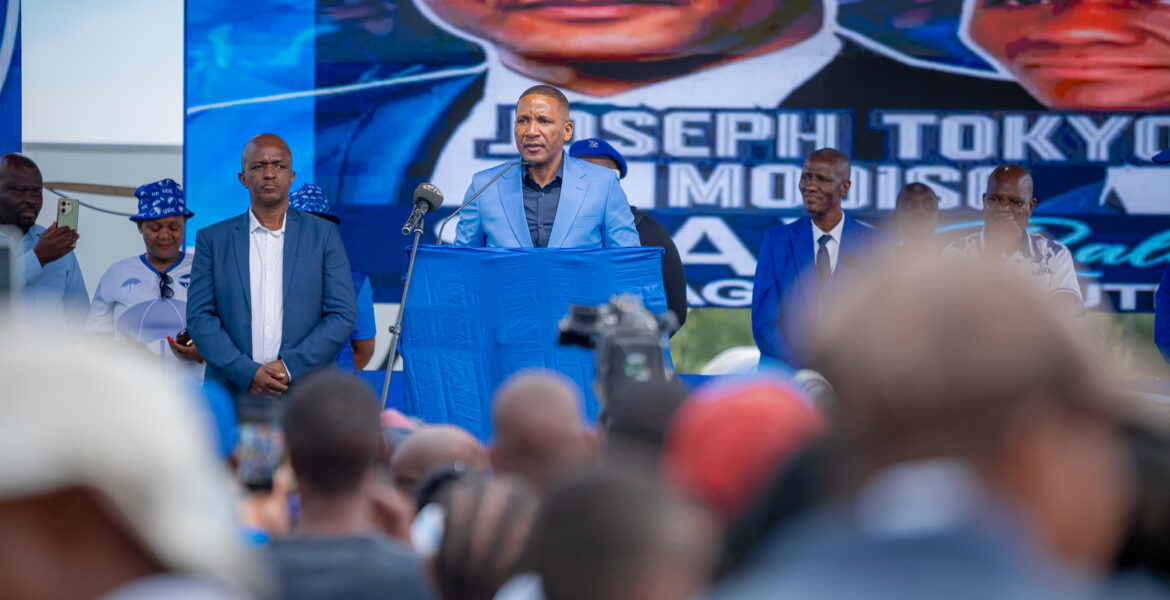
Economists have criticised the Umbrella for Democratic Change government’s 2026 Budget, warning it lacks credible measures to address rising deficits and debt
GAZETTE REPORTER
The Umbrella for Democratic Change (UDC) government is facing scrutiny after its 2026 Budget failed to convince economists that it has a credible plan to rein in ballooning deficits.
Analysts warn that the budget falls short of matching its bold promises of fiscal discipline with concrete action, exposing Botswana to rising debt risks and long-term economic instability.
ECONOMISTS DELIVER DAMNING VERDICT
In its First Quarter Economic Review (January–March 2026), Econsult Botswana paints a bleak picture of a budget that acknowledges fiscal dangers but avoids the tough decisions needed to correct course.
Expectations had been high when Finance Minister Ndaba Gaolathe presented the budget on February 9, given that the UDC had been in power for over a year. Economists argue that this period should have allowed government to fully grasp the “dire fiscal position” it inherited and implement meaningful reforms.
Instead, the review suggests the government hesitated.
“Whereas the 2025 Budget was presented very soon after the new UDC government had taken office, this year’s budget came after more than a year in office… to appreciate the consequences of not undertaking necessary fiscal adjustments,” the economists noted.
DEFICIT CONCERNS MOUNT
While the budget speech promises “fiscal consolidation, discipline and the rebuilding of buffers,” Econsult says the numbers tell a different story.
“The budget as presented envisages a continued high level of spending… and a huge budget deficit,” the report states, pointing to expenditure hovering around 35 percent of GDP and a deficit estimated at about 9 percent.
Economists caution that the deficit could be even larger than projected, citing what they describe as “implausibly low” allocations for debt interest payments—raising fears of hidden fiscal pressures.
Revenue projections offer little comfort. Government expects revenues to cover only about 75 percent of spending in 2026/27, leaving a significant financing gap that will likely require increased borrowing.
DEBT PRESSURES AND UNCERTAIN OUTLOOK
Public debt, already on an upward trajectory, is expected to rise sharply, with authorities likely to lift the statutory debt ceiling—an indication, economists say, of the absence of a sustainable fiscal anchor.
The review also casts doubt on government’s medium-term projections. While the Medium-Term Fiscal Framework forecasts a reduced deficit by 2028/29, Econsult warns that such commitments have historically been delayed.
The budget itself acknowledges the severity of the situation, with Minister Gaolathe conceding that Botswana faces a “structurally overstretched fiscal framework,” where spending consistently exceeds realistic revenues.
With a projected deficit of P26.35 billion for 2026/27 largely unfunded, concerns are growing that government lacks a concrete plan to stabilise public finances.
Econsult argues that the challenge is not only economic but political, warning that the Ministry of Finance has “not yet managed to sell the need for fiscal discipline to the rest of Government.”