

Entrepreneurship education creates deeper value when brands invest in teachers and classroom capability, not just prizes and pitch-night winners.
By Manuel Veiruapi Ruhapo | The Brand Paradox | The Botswana Gazette
Entrepreneurship is often introduced too late. A young person finishes school, struggles to find work, then is told to “start a business”. At that point, entrepreneurship can sound like a response to unemployment rather than a way to notice, test and create value.
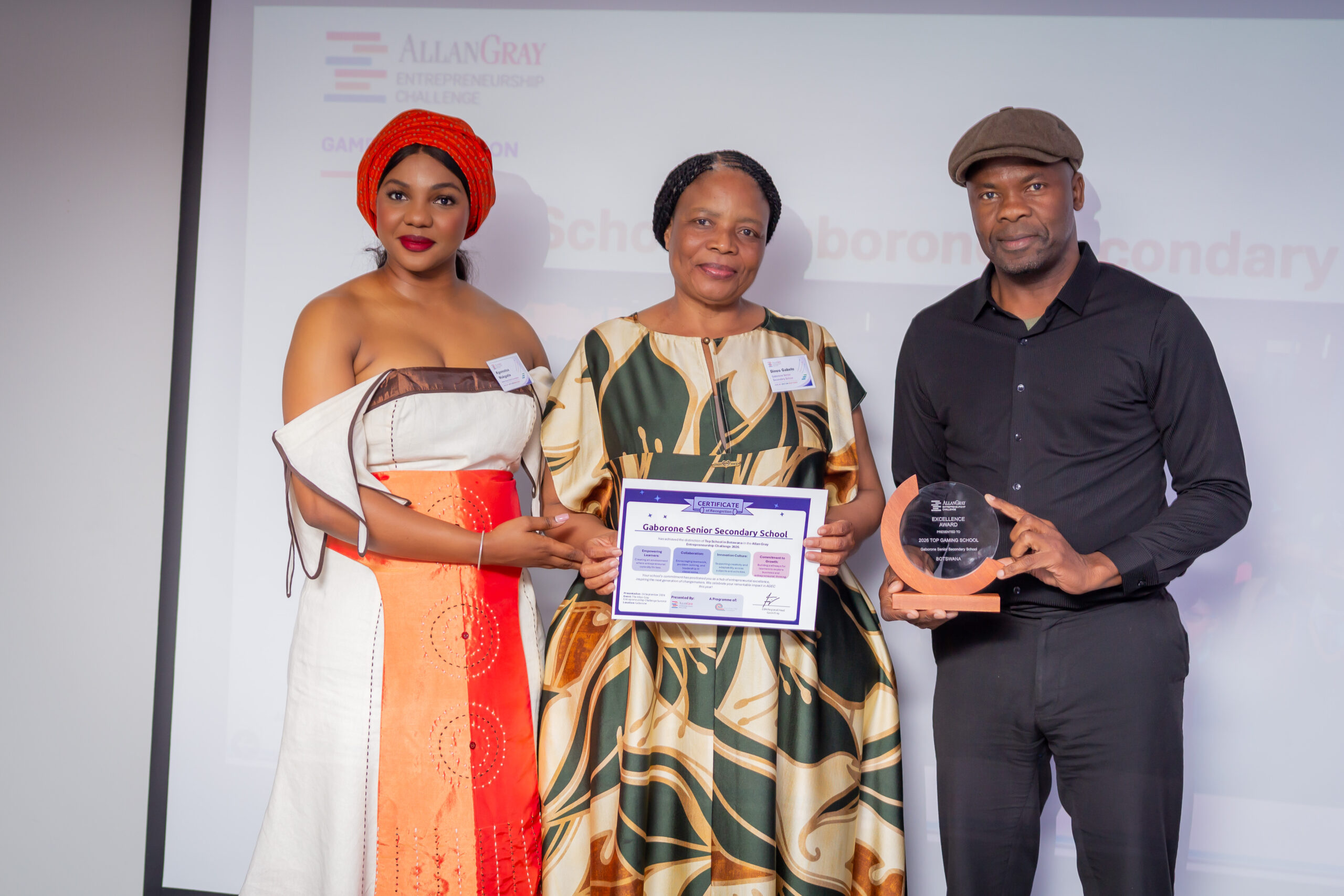
The Allan Gray Entrepreneurship Challenge offers a better sequence. Its high-school competition is open to learners in Botswana, Eswatini, Namibia and South Africa. The programme’s free game can be played at home or in class, online or offline. Learners choose from five shop types, make business decisions and can replay the 30-minute experience. A business pitch challenge and other activities sit alongside the game.
PRACTICE FIRST
A learner needs no capital to learn that customers have choices, cash must be managed and decisions have consequences. A simulation cannot create an entrepreneur. It can make commercial thinking less abstract before a young person risks real money on an untested idea.
CLASSROOM PARADOX
The first paradox is simple: the safest place to develop comfort with business risk is before someone starts a business.
Entrepreneurship education is often judged by a count of registered companies. That is too narrow. Its early value is capability. A learner who can define a problem, listen to a customer, price an offer and explain a decision has skills that matter in a venture, an employer or a community project.
The Allan Gray model treats learning as practice. Its resource library includes teacher lesson plans and learner worksheets for Grades 8 to 12 in subjects including Accounting, Economic and Management Sciences, Life Orientation and Business Studies. Its materials align to South Africa’s CAPS curriculum. Botswana schools should use it as a regional model, not a replacement for Botswana requirements.
A programme succeeds locally when it connects to local realities: the price of a product in pula, a customer in Maun, a farmer seeking a market, a salon building repeat custom or a digital service solving a daily inconvenience. The aim is not to make every learner a founder. It is to let every learner see an opportunity, assess it and act responsibly.
TEACHER MULTIPLIER
The technology may attract attention, but the teacher creates the learning.
A game can place a learner in a virtual shop. A teacher can ask why a decision worked, what information was missing and how the learner would change the plan. That reflection makes a quick activity transferable.
This is the Teacher Multiplier Paradox: the more scalable an entrepreneurship platform becomes, the more its impact depends on the people who make it relevant in the classroom.
For Botswana teachers, this should not mean adding another unsupported demand. A serious programme needs usable lesson plans, short training, clear subject links and offline access where needed. The Allan Gray Challenge provides lesson plans and worksheets. That is a useful starting standard.
The teacher is also the bridge between aspiration and realism. A teacher can turn a pitch into questions about ethics, customer need, cost, teamwork and failure. This protects young people from the idea that entrepreneurship is simply confidence plus a logo.
SPONSOR DISTANCE
For brands, the temptation is to sponsor a final pitch night, offer a cash prize, place a logo on a backdrop and declare support for youth entrepreneurship. That creates attention. It rarely creates a durable learning system.
The Sponsor Distance Paradox is that a brand can create deeper value by moving away from the stage and closer to the teacher’s work. Useful support may be teacher-development sessions, data or offline access, business visits, practical feedback and follow-on support for viable ideas. These are narrative applications, not current campaign descriptions.
Botswana has institutional foundations on which brands can build. The Ministry of Trade and Entrepreneurship lists enterprise development, small-business policy, citizen economic empowerment, mentoring and support for innovative projects among its responsibilities. Botswana Digital & Innovation Hub supports technology-driven businesses and fosters entrepreneurship and technology transfer.
There are local examples of cross-sector practice. Institute of Entrepreneurial Development Botswana says it combines learning, coaching, mentorship, industry exposure and real business ideas. It lists FNB, KBL, Botswana Digital & Innovation Hub, the Ministry of Trade and Entrepreneurship and academic institutions among collaborators. The public record does not establish partner commercial outcomes. It does show entrepreneurship development can connect business, education and enterprise support.
A Botswana brand should be clear about the role it chooses. A bank may help learners understand cash flow. A telecoms company may support digital access and customer contact. A retailer may expose learners to merchandising and supplier standards. A mining or energy business may pose local problems for teams to solve. Each application needs school and education-authority input, not advertising imposition.
WHAT IT MEANS
Business owners and executives: Treat enterprise education as capability building, not a once-off donation. Support teacher preparation, practical learning, local business exposure and follow-on opportunity. Measure completion, teacher use and learners’ ability to solve problems. Do not claim job creation or commercial return without credible evidence.
Marketing professionals: Make the brand’s role useful before making it visible. Build content around learner work and teacher contribution, with consent and safeguarding. The strongest story is evidence that young people learned to test an idea, listen to a customer and improve their work.
Brand managers: Use a long-term partnership model. Align the programme with a genuine capability, but keep education objectives ahead of advertising. A trusted early role can create goodwill. It is not proof of future sales, so report it honestly.
The Allan Gray Entrepreneurship Challenge matters because it changes the order of the conversation. Instead of asking young people to become entrepreneurs after options close, it gives Botswana learners a low-risk place to practise how entrepreneurs think. When brands support the teacher, the classroom and the next step after the pitch, they help turn a competition into a capability system.