
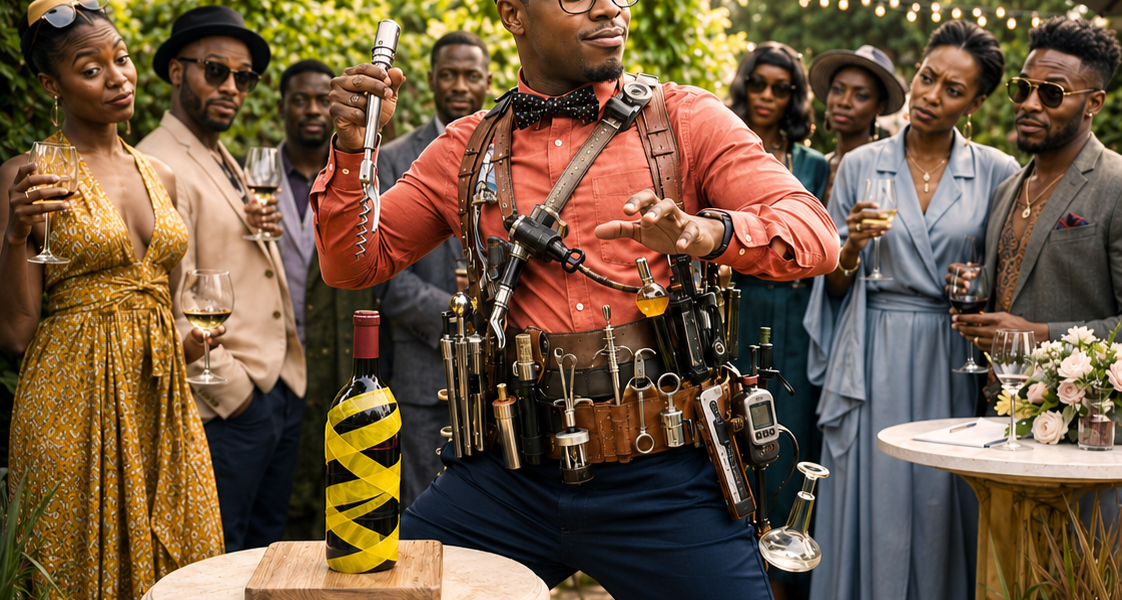
The best way to grow your palate is not through expensive gadgets or rigid preferences, but by staying curious enough to keep exploring what is in the glass.
PHENYO MOTHAGODI
Wine people love gadgets. Decanters shaped like modern art, thermometers, aerators, Coravins and glasses designed with such precision that one begins to suspect there must be a specific glass somewhere for drinking wine on alternate Tuesdays in leap years.
And look, I enjoy a good wine accessory as much as the next person. I have spent an unreasonable amount of money on objects whose sole purpose is to improve my experience of fermented grape juice. The right glass does make a difference. A good decanter has its place. A reliable corkscrew is essential.
But after years of drinking wine, studying wine, writing about wine and helping build a community around wine, I have come to a rather inconvenient conclusion: the most important wine tool isn’t a corkscrew. It is curiosity.
Because curiosity opens far more than bottles. It opens regions, grape varieties, stories, conversations and, occasionally, the uncomfortable realisation that the wine you confidently declared you disliked may actually be something you enjoy.
FREEDOM TO DISLIKE
Let’s establish something immediately: there is no prize for liking every wine. You are allowed to dislike things. You can dislike a Chardonnay. You can dislike a Pinot Noir. You can dislike heavily oaked reds. You can dislike natural wine, orange wine or any wine that smells as though it has just completed a strenuous hike through a barnyard.
That is perfectly acceptable. The mistake is not disliking something. The mistake is deciding you dislike everything in that category forever.
“I don’t like Chardonnay” is a remarkably confident statement considering Chardonnay can taste like crisp green apples, tropical fruit, citrus, buttered toast, vanilla, cream or almost nothing like what you expected, depending on where it was grown and how it was made.
It is a bit like saying you do not like music. Not one song. Not one artist. Not one genre. Ever. Wine, like music, is far too diverse to be reduced to one experience.
Confidence in your palate is important. Curiosity is what keeps that confidence from becoming stubbornness.
WINE LOVERS DISAGREE
One of my favourite things about wine is that there is no final authority. There is no referee who blows a whistle and declares, “This is officially the best wine in the room, everyone else can go home.”
At the Gaborone Wine Club, some of the most enjoyable moments come from disagreement. These are people who have explored wine, attended tastings, visited wine farms, read about producers and spent years developing their palates. Yet we still disagree. Often.
One person finds elegance where another finds disappointment. One person discovers beautiful floral notes while another insists the wine reminds them of something entirely different. Someone declares a wine extraordinary, while another politely wonders whether they accidentally poured from the wrong bottle.
TRUST YOUR PALATE
Too many people are afraid to admit they do not enjoy a wine. They take a sip, look around the table and, instead of being honest, offer a safe “interesting.”
In wine language, “interesting” can mean anything from “this is a beautifully complex expression of terroir” to “I would rather drink something else.” And that is okay.
You do not have to enjoy a wine simply because it is expensive. You do not have to enjoy it because a critic awarded it 98 points. You do not have to enjoy it because everyone else at the table is discussing it with the reverence usually reserved for national monuments.
Confidence without curiosity becomes arrogance. Curiosity without confidence becomes insecurity. Wine requires both.
PALATES GROW
Nobody begins their wine journey identifying obscure aromas, recognising regions blind or confidently discussing every grape variety under the sun. We build our understanding the same way we build knowledge in any other area: through experience.
Try a grape you have never heard of. Buy a bottle from a region you cannot pronounce. Ask a retailer what excites them. Visit a wine farm and, instead of announcing that you are “a Sauvignon Blanc person” or “a Cabernet person”, ask the winemaker what they think you should try.
Nobody knows the wine better than the person who made it.
KEEP EXPLORING
A corkscrew opens a bottle, but curiosity opens everything that comes after. It creates better conversations, better food pairings, better stories and a deeper appreciation of what is in the glass.
The world’s wine shelves are filled with thousands of grape varieties, countless regions and producers whose stories are waiting to be discovered. Some bottles will disappoint you. Some will amaze you. Both experiences have value.
So keep your corkscrew close. It remains an essential piece of equipment. But keep your curiosity closer. It is still the most important wine tool you will ever own.