
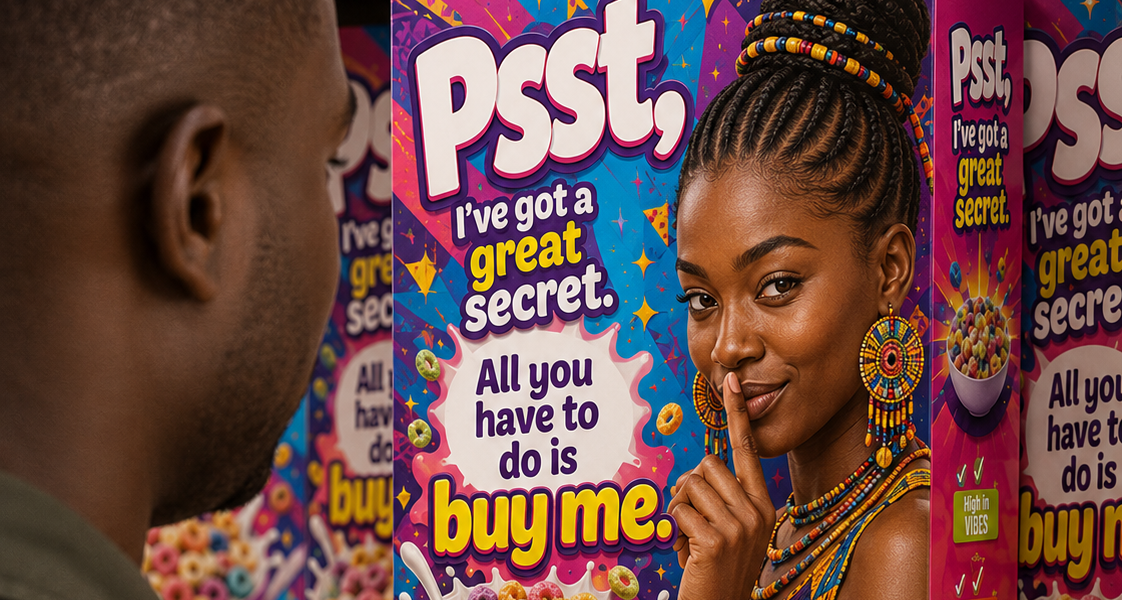
The distraction paradox reveals how powerful business models make customers look one way while value moves another, yet trust collapses when the hidden exchange becomes exploitative.
By Manuel Veiruapi Ruhapo | The Brand Paradox | The Botswana Gazette
THE REAL PRODUCT
There is a question worth asking about every brand you admire.
What are they actually selling?
Not what they say they are selling. Not what the packaging suggests. Not what the advertising shows. What is the real product, and who is the real customer?
The answer is almost never what you think.
THE BURGER BUSINESS
In 1954, Ray Kroc was a 52-year-old milkshake machine salesman when he walked into a McDonald’s in San Bernardino, California. He saw a system. He bought the franchise rights, and within a decade he had built one of the most valuable companies in the world.
McDonald’s is not a fast food company. It is a real estate company.
Harry Sonneborn, Kroc’s financial adviser, explained the model in a meeting that changed everything: “We are not technically in the food business. We are in the real estate business. The only reason we sell fifteen-cent hamburgers is because they are the best producer of revenue from which our tenants can pay us our rent.”
McDonald’s owns the land. It leases the land to franchisees. The franchisees sell the burgers. McDonald’s collects the rent. The burger is the mechanism. The land is the asset. Today, McDonald’s property portfolio is valued at over $40 billion. The hamburger is the world’s most successful distraction.
ATTENTION ASSET
When a product is free, you are not the customer. You are the product.
Google gives you search for free. Facebook gives you connection for free. TikTok gives you entertainment for free. The actual customers are the advertisers who pay to reach you. In 2023, Google’s parent company, Alphabet, generated $237.9 billion in revenue. Approximately 77% of that came from advertising. The search engine is the mechanism. Your attention is the asset.
Meta reported approximately $50 per year in advertiser revenue per user in the United States. You are not using Facebook. Facebook is using you. The data is the business.
This is not a criticism. It is a structural observation. The most effective business models in history give something away to capture something more valuable in return. Gillette sells razors cheaply and makes its money on the blades. The visible product is the mechanism. The recurring purchase is the business.
THE PARADOX
Here is the counterargument that holds equally true.
A brand built on misdirection is only as strong as the gap between what customers see and what they eventually discover.
When customers understand the model, the relationship changes. Facebook has spent the last decade managing the fallout from users realising they were the product. The trust deficit is real. Meta’s brand perception scores in Western markets declined consistently after 2018, when the Cambridge Analytica scandal made the hidden model visible.
McDonald’s real estate model is not a secret. It is a business school case study. The transparency has not damaged the brand because the burger is still good and the franchisees still benefit. The distraction became the foundation.
The difference is simple: misdirection that serves the customer survives discovery. Misdirection that exploits the customer does not.
BOTSWANA BRANDS
Most brands in Botswana are selling exactly what they appear to be selling. There is nothing wrong with that. But the question worth asking is whether there is a more valuable asset underneath the visible product that is being left on the table.
Consider the mobile money sector. The visible product is convenience: send money, pay bills, buy airtime. The real asset is transaction data. Every payment is a data point about spending behaviour, income patterns and financial need. The brand that figures out how to turn that data into financial products tailored to the actual behaviour of Batswana, not the behaviour of customers in markets where the products were designed, will not be competing on transaction fees. It will be competing on insight.
Consider the funeral industry. The visible product is the service: the coffin, the venue, the logistics. The real asset is the relationship with the family at the most emotionally significant moment of their lives. The brand that uses that relationship to build a long-term financial services offering, funeral cover, estate planning and grief support, will not be a funeral parlour. It will be a family institution.
Consider the retail sector. The visible product is the goods on the shelf. The real asset is foot traffic data, purchasing patterns and the physical location itself. Choppies understood this before most. The stores were not just stores. They were data collection points in communities that larger retailers had decided were not worth serving.
WHAT IT MEANS
If you are a business owner or executive, ask the question that Ray Kroc’s adviser asked. What business are you actually in? Strip away the visible product and look at what you are accumulating: data, relationships, location and trust. One of those is worth more than the product you are selling. Find it.
If you are a marketing professional, remember that the most powerful brand stories are not about the product. They are about what the product enables. McDonald’s does not advertise real estate. It advertises family moments, convenience and consistency. The story is the distraction. The asset is underneath. Make sure your brand story is pointing at the right thing.
If you are a brand manager, remember that the brands that last are the ones that know what they are really building, not the ones that know what they are currently selling. Those are different questions. The answer to the second one changes every few years. The answer to the first one should not.
The most effective business models in history made you look one way while the value moved another. The question is not whether your brand is doing this. The question is whether it is doing it deliberately, and whether what is underneath is worth building on.
ABOUT THE COLUMN
The Brand Paradox is a weekly column by Manuel Veiruapi Ruhapo that explores the counterintuitive truths behind building great brands in Botswana and beyond. Manuel Ruhapo is the founder of Blacmarc Group, a brand strategy consultancy that helps businesses solve their most complex brand challenges.
Contact me on: manuel.ruhapo@blacmarc.co.bw / ruhapo@gmail.com