
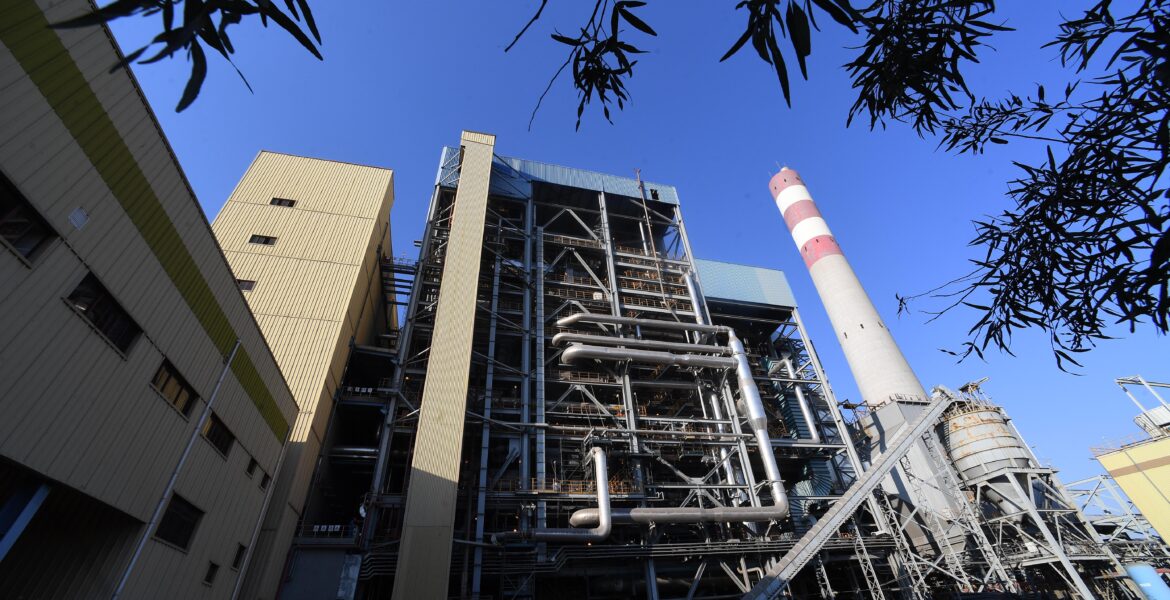
As electricity imports fall, BPC seeks a 33% tariff increase while government regulates petroleum prices to protect consumers, raising questions about the coherence of Botswana’s energy policy.
DR DOUGLAS RASBASH
Botswana imports virtually all its petroleum. Government regulates fuel prices through a system designed, in part, to protect households and businesses from international price volatility. Yet electricity, increasingly generated domestically using Botswana’s abundant energy resources, faces a proposed 33% tariff increase.
Both are forms of energy. Both affect household welfare, industrial competitiveness and inflation. Yet government appears to treat them as entirely separate economic concerns.
One economy. Two energy policies. No apparent coordination.
IMPORTS COLLAPSE
According to Statistics Botswana, electricity imports fell by 61.8% in the first quarter of 2026 and 59.4% in the second quarter, compared with the corresponding periods in 2025.
Over six months, imports plunged from 1,029 gigawatt-hours (GWh) to just 403 GWh, a reduction of approximately 626 million kilowatt-hours.
Meanwhile, more than 200 MW of renewable generation capacity has been connected to the national grid, including major solar developments at Mmadinare and Jwaneng.
BPC has also reported that its own generation assets supplied 86% of electricity requirements in the first quarter of 2026/27, compared with 67% in the previous year.
Botswana is finally reducing its dependence on expensive imported electricity. Surely that should be good news for consumers?
THE SAVINGS QUESTION
BPC’s published 2023/24 financial information reveals that imported electricity cost an average P2.07 per kilowatt-hour. Emergency electricity purchased from South Africa’s Eskom cost an astonishing P5.02 per kWh.
At the historical average import price, the 626 million kWh reduction represents approximately P1.3 billion in gross avoided electricity purchases over six months.
Domestic replacement generation has costs, of course. But illustrative calculations suggest potential net savings of P545 million to P920 million, depending on replacement costs.
These are not verified BPC savings. They are an indication of the financial significance of reduced imports.
So why, with domestic generation improving and expensive imports collapsing, does BPC need another enormous tariff increase?
The corporation reportedly received an average 9% tariff increase in August 2026. Now it seeks a further 33% for 2027/28.
BPC may have legitimate financial obligations, including debt, maintenance and capital investment. But those costs must be reconciled transparently with the changing economics of electricity supply.
Consumers should not be asked to finance yesterday’s problems without receiving the benefits of today’s improvements.
ENERGY TRANSITION
The inconsistency extends into Botswana’s emerging electric mobility policy.
Government is planning a national electric vehicle charging network for 2027. Replacing imported petrol and diesel with domestically generated electricity could eventually save billions of pula in foreign exchange annually.
But the economics of electric mobility depend heavily on relative energy prices.
Increasing electricity tariffs by 33%, while managing petroleum prices to moderate consumer increases, weakens the incentive to switch from fossil fuels to electricity.
The same applies to industrial electrification and other opportunities to substitute imported petroleum with domestic renewable energy.
Government cannot promote electrification with one hand while undermining its economic attractiveness with the other.
This is not merely an environmental issue. It concerns Botswana’s balance of payments, energy security, competitiveness and long-term economic development.
WHO PROTECTS CONSUMERS?
For a household spending P600 monthly on electricity, a uniform 33% increase would add approximately P2,376 annually, assuming unchanged consumption.
Businesses would face higher operating costs, potentially feeding into prices and employment.
Why should the economic consequences of petroleum price increases justify government intervention, while electricity consumers face a potentially much sharper adjustment?
The objective should not be artificially cheap energy. It should be efficiently produced, fairly priced energy that supports national development.
BERA MUST ASK
On 17 November, the Ministry of Minerals and Energy confirmed that BPC’s application had not been approved. The Botswana Energy Regulatory Authority (BERA) is consulting the public until 11 December.
Before approving any increase, BERA must establish the actual savings from reduced imports, the contractual costs of new solar generation, changes in operating efficiency and BPC’s current cost per kWh.
Above all, government must explain how petroleum and electricity pricing fit into a single national economic strategy.
The issue is not whether BPC should recover its legitimate costs. It is whether those costs are efficient, justified and consistent with the country’s wider economic objectives.
If Botswana is finally escaping expensive imported electricity, why are consumers being asked to pay dramatically more?
Energy is one economic system. It is time government started treating it as one.