
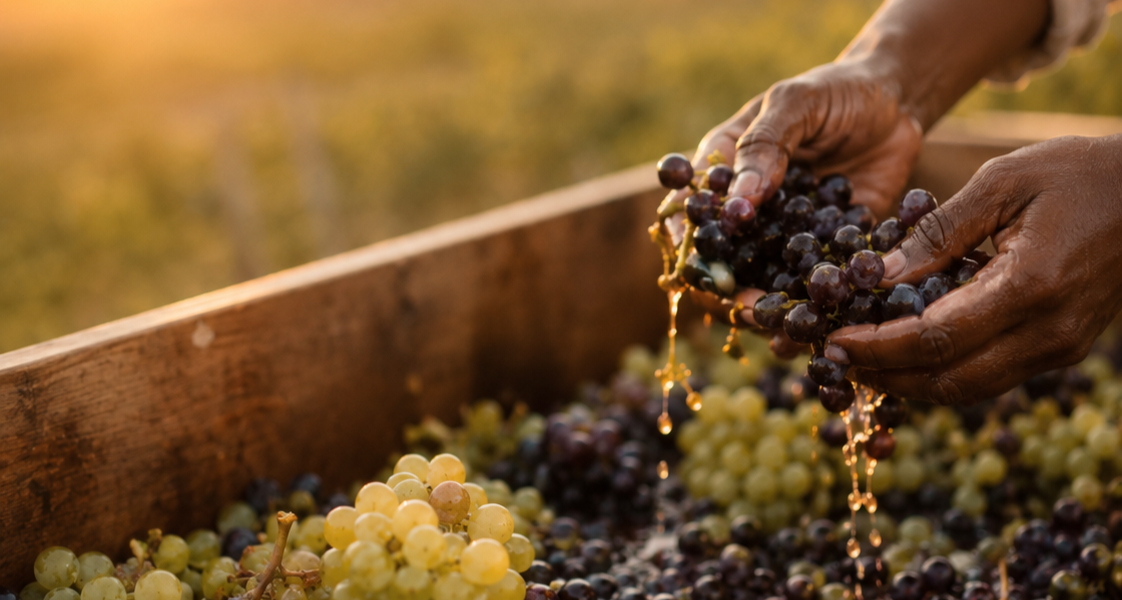
There are more than 10,000 known grape varieties in the world. Ten thousand. Yet somehow, we’ve convinced ourselves that life begins and ends with about six of them.
Somewhere along the way, “I’m a Chardonnay girlie” or “I only drink Cabernet Sauvignon” stopped being a wine preference and became a personality trait. It’s often declared with the confidence of someone announcing their blood type. Now, don’t misunderstand me. There’s absolutely nothing wrong with loving Chardonnay or Merlot. We all have favourites. But imagine travelling the world and refusing to eat anything except chips. You’d miss out on a lot.
The same is true of wine. We’ve already spent time in this column getting acquainted with the celebrity grapes. Chardonnay, Sauvignon Blanc, Cabernet Sauvignon, Merlot, Shiraz and Pinot Noir. They’re famous for good reason. They’re dependable, delicious and found on wine lists from Gaborone to Geneva. But fame isn’t the whole story.
If wine were Hollywood, those six would be the A-listers. The rest of the vineyard is filled with brilliant character actors quietly stealing every scene. And lately, they’ve been stealing mine.
Meeting Wine Royalty
At our recent June Gathering of the Gaborone Wine Club, we explored wines from two outstanding South African producers, Diemersfontein and Babylon’s Peak. As I introduced the lineup, one bottle in particular caught my attention: a Thokozani Cabernet Franc.
Cabernet Franc doesn’t merely make good wine. It’s wine royalty. It’s one of the parents of Cabernet Sauvignon. In fact, Cabernet Sauvignon exists because Cabernet Franc crossed naturally with Sauvignon Blanc centuries ago. Merlot? That’s another of Cabernet Franc’s offspring.
Which means many people who proudly declare themselves “Cabernet Sauvignon people” or “Merlot people” are unknowingly in love with one side of the family without ever meeting the parent. Life has a funny way of doing that.
Cabernet Franc, though, is a very different personality. Softer. More aromatic. More elegant. Think cherries instead of blackcurrants. Fresh herbs instead of brute force. Less boardroom executive, more effortlessly stylish creative director. It’s not trying to impress you. It simply does.
The Day I Was Happily Wrong
Something else happened. I met Carignan for the first time. Yes, you read that correctly. Someone who spends an arguably unhealthy amount of time thinking, talking and writing about fermented grape juice had never knowingly tasted Carignan.
I wish I could tell you I recognised it instantly with the poise of a French sommelier. That I gently nodded, inhaled once and whispered, “Ah yes… old-vine Carignan from warm Mediterranean soils.” I did not. My first thought was, “Well, that’s a lovely peppery Shiraz.” Turns out it wasn’t.
Carignan, once dismissed as a workhorse grape, has quietly been enjoying something of a renaissance. Old vines produce beautifully concentrated fruit, spicy notes and an earthy character that make it an exceptional blending partner. No wonder it has become one of the quiet heroes of regions like Swartland in South Africa and Priorat in Spain.
Which, incidentally, is exactly why I love wine. No matter how much you think you know, there’s always another surprise waiting in the next bottle.
The Supporting Cast Deserves an Encore
That curiosity extends far beyond Carignan. Take Cinsault. Poor Cinsault. One of the hardest-working grapes in South Africa, yet somehow forever overshadowed by louder personalities. Light, juicy and dangerously easy to drink. I once described it as tasting like Kool-Aid. I’ve chosen to interpret that as a compliment.
Then there’s Sangiovese, Italy’s most planted grape and arguably one of its moodiest. Ask five winemakers to produce a Sangiovese and you’ll receive five completely different personalities. It’s the grape equivalent of asking five relatives to cook the same family recipe. Everyone insists theirs is the authentic version.
Or Viognier. Many people think white wine begins and ends with Chardonnay and Sauvignon Blanc. Viognier politely disagrees. Rich apricot. Peach. Orange blossom. A wonderfully perfumed nose that completely changes people’s expectations of what a white wine can be. It’s often the bottle that converts people who thought they didn’t enjoy aromatic whites.
And then there’s Grenache, one of the world’s most planted grapes, yet rarely the first bottle anyone reaches for. Soft red fruit, spice and remarkable versatility. It shines on its own and brings elegance and warmth to countless blends.
It’s remarkable how many extraordinary wines spend their lives sitting quietly on shelves simply because we don’t recognise the grape on the label.
Choose Curiosity Over Habit
Which brings me to my challenge. The next time you’re standing in front of a wine shelf, resist muscle memory. Don’t automatically reach for your usual suspect. Pick up the bottle you’ve never heard of.
Worst-case scenario? You spend one evening discovering why it isn’t your favourite. Best-case scenario? You discover your new favourite.
Better still, if you’re lucky enough to visit a wine estate, don’t march confidently up to the tasting counter announcing you’re “a Chardonnay girlie.” Instead, ask the winemaker one simple question: “What are you excited about?”
Nobody knows those wines better than the people who grew the grapes, nurtured the vines and watched every vintage unfold. More often than not, they’ll pour you something you never intended to try. Let them surprise you. Wine was never designed to confirm what you already know. It was designed to reward curiosity.
A Glass Half Full
Even those of us who spend an unreasonable amount of time swirling glasses, discussing tannins and occasionally pretending to detect “forest floor after autumn rain” still stumble across grapes we’ve never tasted before.
If the wine geeks are still learning, surely the rest of us can retire the phrase, “I only drink…” The world’s too delicious for that.
Until next time, keep your glass half full, your mind wide open and remember: sometimes the most exciting bottle on the shelf is the one you’ve walked past a hundred times.