
By Manuel Veiruapi Ruhapo | The Brand Paradox | The Botswana Gazette
On 24 May 2026, Martin Odegaard lifted the Premier League trophy at Selhurst Park in south London, and the world came apart.
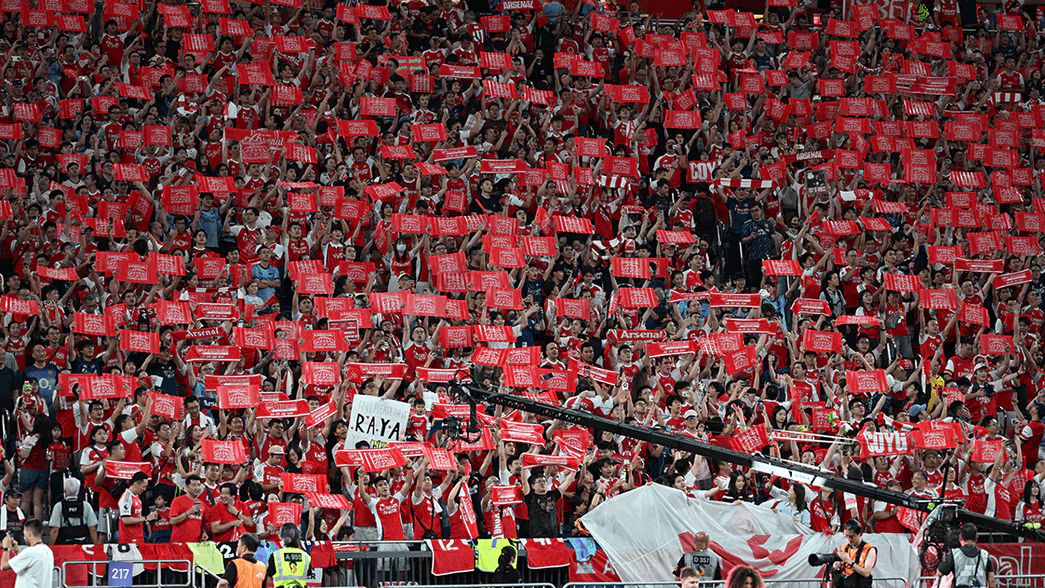
Not the world in the polite, social-media-engagement sense. The world in the literal sense. Streets in Nairobi. Bars in Singapore. Living rooms in Gaborone. Rooftops in Lagos. People who had never been to London, who had never seen the Emirates Stadium in person, who had no geographical or cultural connection to North London whatsoever, erupting in celebrations that looked, from the outside, indistinguishable from the celebrations of people who had waited their entire lives for this moment.
Because for many of them, they had.
Arsenal had not won the Premier League in 22 years. The last time was 2003/04, the season of the Invincibles, when Arsène Wenger’s side went the entire league campaign unbeaten, a feat that has not been repeated in English football since. In the two decades that followed, Arsenal finished second. They finished fifth. They missed the Champions League for years at a stretch. They watched rivals win title after title. Their supporters were mocked, pitied, and occasionally self-deprecating about it. “We’re the Arsenal and we’re alright,” became a kind of gallows humour that the fanbase wore like a badge.
And then, on a Sunday afternoon in May 2026, Mikel Arteta’s side confirmed the title, and 22 years of accumulated longing became 22 years of accumulated joy, released simultaneously, across every time zone on earth.
What happened in those moments is not a football story. It is a brand story. And it is one of the most instructive brand stories of the decade.
The Paradox of Deprivation
Here is the counterintuitive truth that Arsenal’s title win reveals about brand loyalty.
The 22-year wait did not weaken Arsenal’s brand. It strengthened it. Every year without a title was a year in which the fanbase’s emotional investment deepened, not because they were rewarded, but because they were not. The suffering created the stakes. The stakes created the meaning. And the meaning, accumulated over two decades of near-misses and disappointments, is what made the moment of victory so explosively emotional that it spilled out of living rooms and onto streets across the world.
This is the Paradox of Deprivation. The brand that makes its audience wait, that withholds the reward long enough for the desire to compound, produces a moment of fulfilment that no brand that delivers on schedule can replicate. The joy of Arsenal fans on 24 May 2026 was not proportional to winning a football league. It was proportional to 22 years of wanting to win a football league. The brand did not create that emotion. The wait did. But the brand was the vessel that held it.
No marketing campaign produced what happened in Nairobi and Singapore and Gaborone. No sponsorship deal, no social media strategy, no brand activation created those scenes. What created them was the accumulated emotional investment of millions of people who had chosen to attach their identity to this club and had held that attachment through years of disappointment. The brand’s job was simply to be worth holding onto. And when the moment came, the pent-up energy of 22 years found its release.
What Arsenal’s Brand Actually Is
It is worth being precise about what Arsenal’s brand consists of, because it is not what most people think it is.
It is not the cannon on the crest. It is not the red and white kit. It is not the Emirates Stadium or the history of Highbury or the legacy of Arsène Wenger, though all of these are elements of it. Arsenal’s brand is a set of values and a style of play that has been consistent enough, over long enough, to create a specific kind of identity that specific kinds of people recognise as their own.
Arsenal have historically stood for a particular aesthetic: attacking, technical, stylish football. The club has a reputation, earned over decades, for developing young players and playing the game in a way that is worth watching regardless of the result. Wenger’s teams played football that neutrals admired. Arteta’s teams have done the same. This consistency of style, this commitment to a particular way of doing things even when it does not always produce trophies, is what has made Arsenal’s brand legible and attractive to people who have no tribal reason to support a North London club.
The fans in Kenya, Singapore, and Botswana did not choose Arsenal because of geography. They chose Arsenal because of identity. The brand represented something they wanted to be associated with: quality, style, a certain kind of dignity in defeat, and the belief that doing things the right way eventually produces the right result. The 22-year wait was, in a perverse way, the ultimate proof of that belief. They stayed. They held. And on 24 May 2026, the belief was vindicated.
What Botswana’s Brands Can Learn
The Arsenal story contains specific, transferable lessons for any brand operating in Botswana’s market. They are not comfortable lessons. But they are precise ones.
Stand for something specific enough to be divisive. Arsenal’s brand is not universally loved. It is intensely loved by some people and actively disliked by others. That is not a brand weakness. It is a brand strength. A brand that everyone likes mildly is a brand that no one loves deeply. The brands in Botswana that have the most loyal customers are the ones that have made clear choices about what they stand for, choices that inevitably mean they are not for everyone. The brands that try to appeal to everyone produce the mild, forgettable middle ground that no customer feels strongly about.
Build for identity, not just transaction. Arsenal’s fans do not support the club because it is the most convenient football club to support. They support it because supporting Arsenal is part of who they are. The brand has become an identity marker. The most powerful brands in any category achieve the same thing: they become part of how their customers describe themselves. In Botswana’s market, the brands that achieve this are the ones that understand the communal, identity-driven nature of the consumer culture and build their brand accordingly.
Earn the right to the moment. The celebration on 24 May 2026 was as large as it was because Arsenal had earned it over 22 years of consistent effort, honest play, and genuine commitment to a style and set of values. The moment was credible because the brand was credible. Brands that manufacture moments, that create artificial milestones and celebrate them loudly without the underlying substance to justify the celebration, produce the opposite effect: cynicism. The market knows the difference between a brand that has earned its moment and a brand that is performing one.
The Global Fan as Brand Asset
One more element of the Arsenal story deserves specific attention, because it is the element that is most directly relevant to Botswana’s brands with regional or continental ambitions.
Arsenal’s global fanbase is not a marketing achievement. It is a brand achievement. The club did not acquire fans in Kenya and Singapore and Botswana by running targeted advertising campaigns in those markets. It acquired them by being consistently excellent, consistently distinctive, and consistently true to a set of values that transcended geography. The fans came to the brand. The brand did not chase the fans.
This is the model that Botswana’s most ambitious brands need to understand. The path to regional or continental relevance is not a regional marketing campaign. It is a brand that is specific enough, excellent enough, and consistent enough that people outside the home market choose to adopt it as their own. Choppies attempted geographic expansion. The brands that will succeed at continental scale will do it differently: by building something in Botswana that is so distinctively excellent that the continent comes to them.
Arsenal did not conquer the world. The world chose Arsenal. That is the difference between marketing and branding. And it is the difference between a brand that is present in multiple markets and a brand that belongs to the world.
The Column Version of the Paradox
The scenes from Nairobi, Singapore, and Gaborone on 24 May 2026 were not produced by Arsenal’s marketing department. They were produced by 22 years of a brand being worth believing in, even when belief was not rewarded.
That is the Arsenal Paradox. The wait was not a failure of the brand. It was the making of it. And the moment of victory was as large as it was because the brand had been held, faithfully, by millions of people who had decided that what Arsenal stood for was worth holding onto.
Every brand in Botswana is asking the same question Arsenal’s supporters were asking for 22 years: is this worth it? Is this brand worth my loyalty, my money, my identity?
The brands that answer that question honestly, through consistent delivery, clear values, and genuine commitment to excellence, are the ones that will produce their own version of those scenes. Not necessarily in 22 years. But in the accumulation of time that it takes to build something real.
Build something worth believing in. The celebration will come.
About The Brand Paradox
The Brand Paradox is a weekly column by Manuel Veiruapi Ruhapo that explores the counterintuitive truths behind building great brands in Botswana and beyond. Manuel Ruhapo is the founder of Blacmarc Group, a brand strategy consultancy that helps businesses solve their most complex brand challenges.
Contact: manuel.ruhapo@blacmarc.co.bw / ruhapo@gmail.com