
Wine’s Executive Directors of Southern Africa. A Quiet Boardroom That Runs the Entire Industry
There is a comforting myth in wine culture that choice is infinite, that somewhere on a remote hillside a winemaker is bottling something so obscure it will liberate you from the tyranny of familiarity. The reality, at least in Southern Africa, is far less romantic and far more structured. You are, more often than not, drinking from a shortlist. A very confident shortlist. Six grapes, repeatedly selected, repeatedly repackaged, and repeatedly trusted to do the heavy lifting of an entire industry.
These are the Big Six: Cabernet Sauvignon, Merlot, Shiraz, Chardonnay, Sauvignon Blanc, and Pinotage. Everything else may decorate the conversation, but these are the ones running the meeting. They are not suggestions. They are infrastructure.
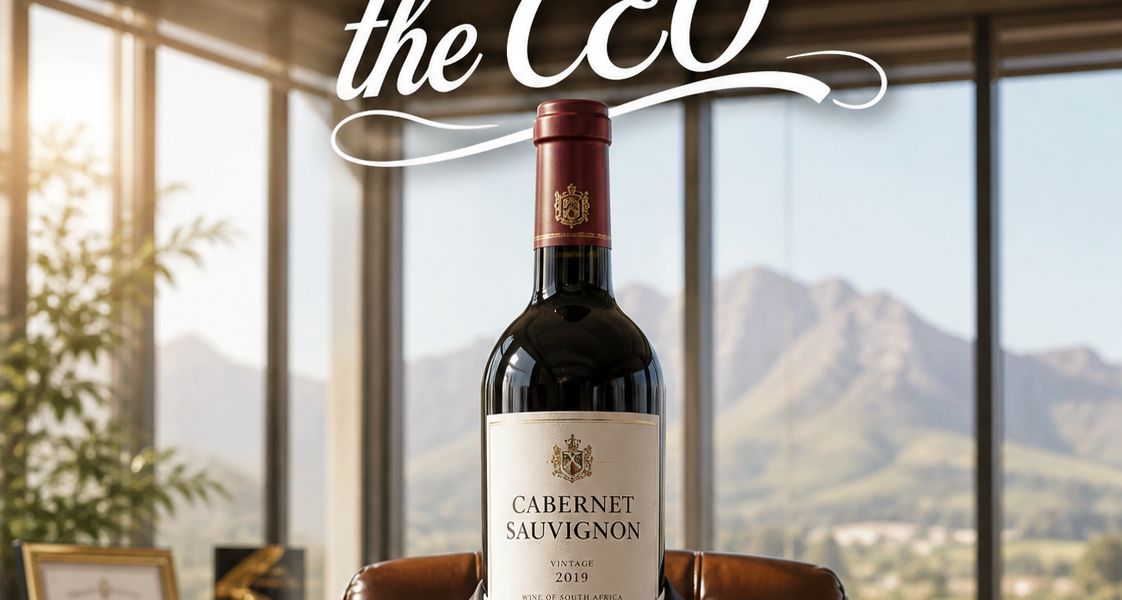
Cabernet Sauvignon — The CEO Who Never Leaves the Table Early
Cabernet Sauvignon is the executive who refuses to retire. It walks into the glass with blackcurrant, cedar, and tannins that behave like they have legal representation. It is structured to the point of seriousness, and in Southern Africa’s warmer pockets it often arrives fully formed, as if it has already chaired the meeting before you sat down.
Cabernet does not negotiate with your palate. It sets terms and expects compliance.
Merlot — The COO of Balance and Damage Control
Merlot is what happens when someone in the room realises not everything needs to be a confrontation. It is softer, rounder, and often unfairly dismissed as “easy,” which says more about the critic than the wine. Plums, cocoa, and quiet confidence define it, but its real skill is diplomacy.
In blends, it is the reason Cabernet behaves. Alone, it is the reason Cabernet is optional.
Shiraz — The Creative Director Who Never Got the Memo About Subtlety
Shiraz is where the industry allows itself theatre. In its warmer expression it is generous, spicy, and slightly louder than necessary, as though it suspects restraint is a marketing conspiracy. In cooler expressions it becomes more composed, but in Southern Africa it tends to lean into ripeness and presence.
It is the grape equivalent of someone who improves the meeting simply by refusing to stay quiet.
Chardonnay — The Strategist Everyone Misreads
Chardonnay is not confused. It is adaptive. The confusion exists in how it is handled. Oaked, it becomes textured, layered, and occasionally accused of excess. Unoaked, it turns precise, linear, and almost aggressively focused.
The mistake is assuming Chardonnay has an identity crisis. It simply reflects management style.
Sauvignon Blanc — The High-Performance Specialist with Zero Patience
Sauvignon Blanc has no interest in your emotional state. It is sharp, aromatic, and deliberately high-definition, offering gooseberry, citrus, and green edges that feel slightly overclocked. It is not subtle and does not apologise for that. In coastal regions it tightens further, becoming saline and brisk, like efficiency in liquid form.
Pinotage — The Local Executive Finally Being Taken Seriously
Pinotage has spent too long carrying the burden of outdated assumptions. What was once heavy, smoky caricature is now increasingly refined, structured, and site-driven in ways that reflect a maturing industry rather than a struggling grape.
Modern Pinotage is no longer a debate. It is a correction.
Why the Board Still Controls the Market
The Big Six persist not because the industry lacks imagination, but because they work. They are commercially resilient, viticulturally reliable, and culturally embedded in how Southern Africa understands wine.
The shelves may look diverse, but structurally, they are a rotating executive committee wearing different labels and occasionally pretending to be new.
You are not lacking choice. You are operating inside a highly efficient system of controlled repetition.