
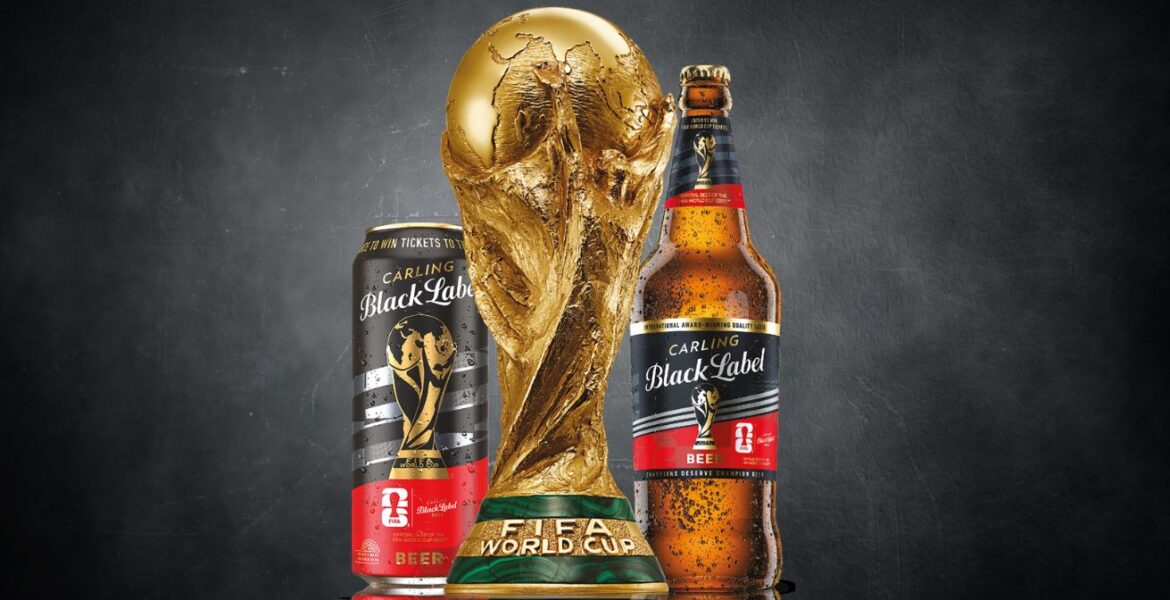
The world’s biggest sporting events sell sponsorship rights for hundreds of millions of dollars, yet some of the most memorable and effective campaigns come from brands that never paid for official access. From ambush marketing stunts to cultural storytelling, the real battle is not for sponsorship rights but for attention.
By Manuel Veiruapi Ruhapo | The Brand Paradox | The Botswana Gazette
FIFA’s official sponsorship packages for the 2026 World Cup in the United States, Canada, and Mexico are reported to cost top tier partners in excess of $200 million. That buys you the logo, the association, the exclusive rights, and the legal protection. It also buys you the right to say, in your advertising, that you are an official partner of the FIFA World Cup.
And yet some of the most effective brand activations in World Cup history have been executed by brands that paid nothing to FIFA, received no official rights, and in some cases paid fines for the privilege of being associated with the tournament at all.
That says a lot about what sponsorship actually buys. And it says even more about what it does not.
THE ATTENTION PARADOX
In 2010, at the FIFA World Cup in South Africa, Dutch beer brand Bavaria sent 36 women into the stadium wearing matching orange mini dresses. The dresses were branded. Bavaria was not an official sponsor. Budweiser was. FIFA filed criminal charges against Bavaria and had the women removed from the stadium.
Bavaria received global news coverage worth multiples of any fine it paid. The stunt was discussed in marketing circles for years. Budweiser, which paid hundreds of millions for official rights, was barely mentioned in the same breath.
This is the Attention Paradox: in a media environment where attention is the scarce resource, the brand that earns attention through ingenuity often outperforms the brand that buys attention through rights fees. The official sponsor pays for the right to be associated with the event. The ambush marketer pays for the story. And in a world where people share stories and scroll past logos, the story is worth more.
Nike has executed this logic at industrial scale. Adidas has been an official FIFA World Cup sponsor since 1970. Nike has never held that title. And yet in 2010, 2014, and 2018, independent research consistently found that more consumers believed Nike was the official sponsor than believed Adidas was. In 2010, Nielsen tracked online buzz for the month prior to the tournament. Nike held a 30.2% share. Adidas, the official sponsor, held 14.4%. Nike did not sponsor the World Cup. Nike sponsored the players, the teams, and the cultural conversation around the tournament. The distinction is precise and the result is instructive.
IRONY AMPLIFIES ATTENTION
There is a second dimension to this story that is less discussed. FIFA’s aggressive enforcement of its sponsorship rights, the criminal charges, the stadium ejections, the legal threats, has consistently amplified the brands it was trying to suppress. The harder FIFA fought Bavaria, the more coverage Bavaria received. The more aggressively FIFA policed its official marks, the more the public became aware that non official brands were finding creative ways around the restrictions.
This is the Ironic Process Paradox at institutional scale. The organisation that fights its challengers with maximum force makes its challengers more visible, not less. The correct response to ambush marketing is not enforcement alone. It is making the official sponsorship so valuable and so visible that the ambush becomes irrelevant. FIFA has not consistently managed this. The result is a tournament where the official sponsors are often less memorable than the brands that gatecrashed.
BOTSWANA’S WORLD CUP LESSON
The 2026 World Cup is being hosted across 16 cities in the United States, Canada, and Mexico. Botswana brands will not be official FIFA partners. The entry cost alone makes that impossible. But the World Cup will be watched by millions of Batswana, and the conversation around it will be live on every social media platform in the country for the duration of the tournament.
The question is not whether Botswana brands can afford to sponsor the World Cup. The question is whether they understand that sponsorship and association are different things, and that the most effective associations are often built through creativity rather than rights fees.
A local brand that builds a genuinely entertaining World Cup campaign, one that earns attention through wit, cultural relevance, or sheer audacity, can generate the kind of brand recall that official sponsors pay hundreds of millions to achieve. The mechanism is the same one Bavaria and Nike used: give people something worth talking about, and let the conversation do the work.
The Sponsorship Paradox is not an argument against sponsorship. Official rights have genuine value. The association with a trusted global event transfers credibility. The legal protection prevents competitors from free riding. For brands with the budget and the strategic fit, official sponsorship is a legitimate and powerful investment.
The paradox is this: the brands that treat sponsorship as a substitute for creativity consistently underperform the brands that treat creativity as a substitute for sponsorship. The logo on the stadium is not the campaign. The campaign is the campaign. And the World Cup, more than almost any other event on earth, rewards the brands that understand the difference.